














A Menomonie High School graduate is helping UW-Stout Polytechnic explore how artificial intelligence can make thousands of historical records more accessible to researchers.
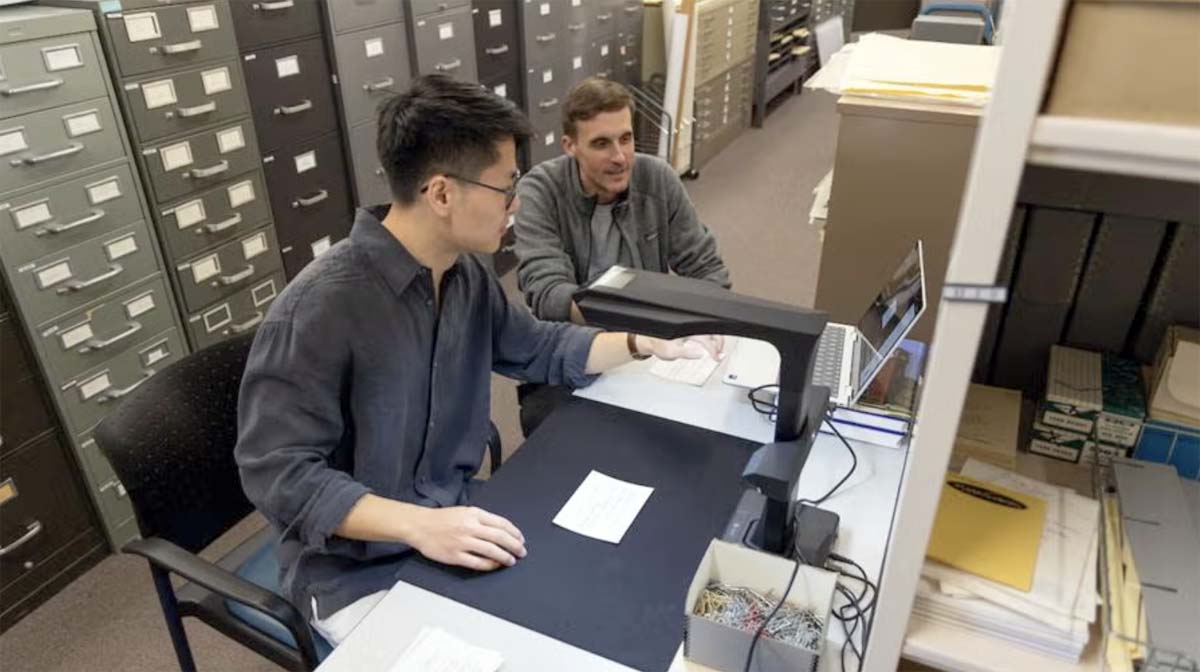
David Statz, a 2000 MHS graduate and Emerging Technologies Archivist at UW-Stout’s University Archives and Area Research Center, is overseeing a project to convert handwritten historical records into searchable digital text. He is working in conjunction with Head Archivist Victoria Stewart on the Automated Handwriting-Transcription Tool.
The project focuses on records such as genealogical surname cards, court files and naturalization documents. While the records contain decades of regional history, much of that information is difficult to search because it is written in cursive handwriting.
This summer, applied mathematics and computer science senior Jake See began the first phase of the project, applying classroom concepts and independent research to the challenge of manually transcribing archival records.
“The archives is exploring how artificial intelligence and other computational tools can support the work of preserving and providing access to historical records. The handwriting recognition project is one part of a broader effort to explore how new technical tools can assist archival work. A successful handwriting recognition system could make historical records faster to process and easier to search and review,” See said.
See’s internship is part of Statz’s larger Local AI Classification and Metadata Engine project. That project examines unorganized digital folders in the archives and uses artificial intelligence to produce descriptions of files, identify what images and documents contain, and suggest categories to make the material easier to organize and search.
Together, the projects are intended to reduce the amount of time archivists must spend manually processing historical records while making the information more accessible to researchers.
“The projects aim to spare archivists and researchers the slow, manual process and time of transcribing records one card at a time. By creating these tools, additionally, these materials become searchable for students, genealogists and community members who can’t visit in person,” Statz said.
To read the complete story by Abbey Goers, go to UW-Stout Polytechnic